
_edited.png)


On Harry Bauld and the College Essay

Harry Bauld has been helping students write the college application essay for more than thirty years. For years, when I was Co-Director of College Counseling at Colorado Academy, we brought Harry in to lead an essay workshop for our seniors, and I watched him distill a lifetime of writing lessons into a couple of hours.
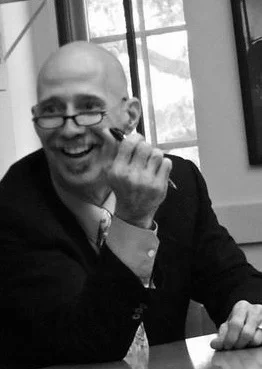
His 1987 book, On Writing the College Application Essay, is still one I recommend to families who want to understand what this assignment actually is. He was interviewed by Norman Vanamee in Town & Country a couple of years ago, and the piece is worth your time: "An Ivy League Expert on How to Write a College Application Essay".
Here are a few highlights from Harry:
On why good students freeze. Bauld's observation is that the students who get most paralyzed are often the strongest ones, because they have spent their whole school career writing for teachers who are paid to like them and help them, and they do not know what to do when the audience changes. That matches what I see. The student who can write a beautiful AP Lit paper sometimes struggles hardest with the Common App, because the rules of the assignment are not the rules they have been trained on. Part of the work of the summer is helping them notice that and adjust.
On "Let's try writing the wrong thing." The path to the right essay almost always runs through a few wrong ones. The wrong essay is not a failure of the process. It is the process. Students who give themselves permission to draft badly get to a real essay faster than students who are trying to write the right one from the first sentence.
On "Why Us." Bauld is more cynical about the supplemental "Why Us" question than I usually am out loud, but he is not wrong. These questions are partly institutional vanity, and the standard advice (name a professor, name a class) produces standard answers. The harder and better question is the one underneath: why are you actually applying to this school, and what in your own experience makes the answer specific?
On reading. Students read less than they used to, and reading is what makes them better writers. If you are a parent of a sophomore or junior reading this, the most useful thing you can do for the essay process, eighteen months out or twelve months out or six months out, is to make space in the house for your kid to read for pleasure, books they choose, books no one is grading, whatever pulls them in.
More on this important topic here: https://www.arts.gov/sites/default/files/ToRead.pdf
The short version? Few students read frequently and deeply anymore. It is the single most powerful preparation for life, college admission, college academic success, SAT and ACT, and developing a mature level of human empathy.
Bonus:
In his book, Harry outlines the essay topics most likely to land flat. They are often the topics families encourage students to lead with. Here is a summary, with the eternal caveat that there are no wrong essay topics, only more or less personally specific framing and reflection.
The Trip. The "broadened horizons" essay. Sweeping conclusions about a foreign country, the writer's own culture, or the human condition, with none of the specific details that would have made the trip real on the page.
My Favorite Things. The list essay. Things I love, things I hate, and the assumption that the list itself is interesting. It almost never is.
Miss America. The earnest take on world peace, climate change, or any other issue treated at the altitude of a pageant answer. The prompt asks for a position; the student gives a platitude.
The Jock. The activity essay built on a formula: through this sport (or instrument, or club, or internship), I learned (Noble Value A), (High Platitude B), and (Great Lesson C). Same shape every time, regardless of the activity.
My Room. The fallback when a student cannot think of anything else. A tour of the bedroom as a stand-in for a self. (Note from Mark: This is an example of a montage essay, which I have seen work well, but it has been overused.)
The Three D's. Discipline, determination, and diversity of interests will make me succeed, trust me.
Tales of My Success. The big-game, big-performance, big-finish essay. The hard work paid off, the medal was earned, and the audience cheered.
The Pet Death. The grief essay where the universal human experience of loss eclipses personal viewpoint and anecdote.
The Perspirant. The essay about the stress of applying to college or writing the essay itself. Bauld calls these students "sweaty," and admissions officers can smell it from across the room.
Selling and Telling Autobiography. The attempt to fit a life story into 650 words, usually by sacrificing every specific detail that would have made any one chapter of it interesting.
The thread connecting these is not a topic; it is an approach. Bauld's point is that admissions readers have, in his phrase, built-in BS detectors, and the hard sell is the fastest way to set them off. The essay that works is the one that stops trying to impress and starts trying to be specific.
The whole interview is here: "An Ivy League Expert on How to Write a College Application Essay" by Norman Vanamee for Town & Country. Bauld's book is On Writing the College Application Essay (1987, revised 2012), which I keep on the shelf and pull down often.
#independenteducationalconsultant #privatecollegecounselor #gratitude #spuron #collegeessay #applicationessay #collegeadmissions #ethical #fithappens #msquaredcounseling #collegecounselor #selectivity #collegeapplicationhelp #applytocollege #collegecounseling #evidencebased #zoomcollegecounselor #nationwide #capitaldistrict #bestcolleges #bestcollegadvice #commonapp



Incredible insights here, thanks for this valuable post! International Schools in Qatar